The Ultimate Guide to Carnarvon Gorge
A Complete 3-Day Walking Itinerary for One of Queensland’s Most Spectacular National Parks
By Over the Hill Explorer
“Too old to rush, too young to stay home.”
Welcome to Carnarvon Gorge
There are places you visit because they’re famous.
Then there are places that quietly steal your heart.
For us, Carnarvon Gorge is one of those rare destinations.
Nestled deep within Queensland’s Central Highlands, this ancient landscape has been carved by water over millions of years. Towering sandstone cliffs rise more than 200 metres above crystal-clear creeks, while lush rainforest thrives beneath the shade of ancient cycads and towering eucalypts. Every walking track reveals another hidden wonder—whether it’s a moss-covered grotto, Aboriginal rock art thousands of years old, or a peaceful swimming hole where nature sets the pace.
Unlike many destinations that are experienced from the car, Carnarvon Gorge rewards those who are willing to walk. The more time you spend exploring, the more this remarkable place reveals itself.
We spent three unforgettable days here, taking our time, stopping often to photograph the changing light, listening to birdsong echo through the gorge and discovering why this national park deserves a place on every Australian travel bucket list.
If you’re planning your first visit—or simply dreaming about one—this guide will help you make the most of every moment.
What’s Inside This Guide
✔ Where is Carnarvon Gorge?
✔ How to get there
✔ Best time to visit
✔ Where to stay
✔ Walking track guide
✔ Walking maps
✔ Our complete 3-day itinerary
✔ Photography locations
✔ Wildlife you’ll see
✔ Packing checklist
✔ Frequently Asked Questions
Where is Carnarvon Gorge?
Carnarvon Gorge is located within Carnarvon National Park in Queensland’s Central Highlands, approximately 720 kilometres northwest of Brisbane.
Although it looks remote on a map, it’s surprisingly accessible by sealed roads for most of the journey, making it one of Australia’s most rewarding road trips.
Driving Distances
| From | Distance | Approximate Driving Time |
| Brisbane | 720 km | 8½–9 hours |
| Toowoomba | 560 km | 6½ hours |
| Rockhampton | 430 km | 5 hours |
| Emerald | 250 km | 3 hours |
| Roma | 240 km | 3 hours |
The final section into Carnarvon Gorge is a scenic drive through grazing country before the landscape suddenly changes into dramatic sandstone cliffs.
It’s one of those drives where the anticipation builds with every kilometre.
How to Get There
For most visitors, driving is the easiest and most enjoyable way to reach Carnarvon Gorge.
The roads are sealed for the majority of the trip, with only the final section depending on current conditions. Check road updates before travelling, especially after heavy rain.
Fuel Stops
Fill up before leaving the larger regional centres.
Recommended fuel stops include:
- Emerald
- Roma
- Injune
Don’t assume fuel will be available closer to the gorge.
Supplies
Purchase groceries before arriving.
Accommodation providers have limited supplies, but you’ll save money and have more options if you bring your own food.
Mobile Reception
Reception is limited once you enter the national park.
Download maps before leaving town.
Let family know your travel plans.
Enjoy being disconnected.
Best Time to Visit
One of the reasons Carnarvon Gorge is so special is that every season offers something different.
Autumn (March–May)
Perfect temperatures.
Comfortable walking conditions.
Fewer crowds.
Excellent photography light.
Winter (June–August)
Peak walking season.
Cool mornings.
Beautiful sunny afternoons.
Ideal for long hikes.
Expect accommodation to book out early.
Spring (September–November)
Wildflowers begin appearing.
Pleasant temperatures.
Excellent wildlife activity.
Wonderful bird photography.
Summer (December–February)
Hot.
Humid.
Afternoon storms are common.
Walking is best completed early in the morning.
Where to Stay
The Carnarvon Gorge area offers accommodation to suit most travel styles.
Carnarvon Gorge Wilderness Lodge
Comfortable cabins surrounded by bushland.
Ideal for couples looking for a little extra comfort after a day of walking.
Takarakka Bush Resort
A favourite with walkers.
Offers camping, cabins, safari tents and caravan sites.
Great location close to the walking tracks.
Camping
If you enjoy camping beneath the stars, you’ll love staying within walking distance of the gorge.
The early morning birdlife alone makes camping worthwhile.
Walking Overview
One of the things we loved most about Carnarvon Gorge is that almost every major attraction branches from one main walking track.
That means you don’t need to drive between attractions. Park your car, lace up your walking shoes and spend the day exploring on foot.
Main Highlights
- Moss Garden
- Amphitheatre
- Art Gallery
- Cathedral Cave
- Ward’s Canyon
- Boowinda Gorge
- Big Bend
Most side tracks are well signposted and can easily be combined into one unforgettable day.
Three-Day Walking Itinerary
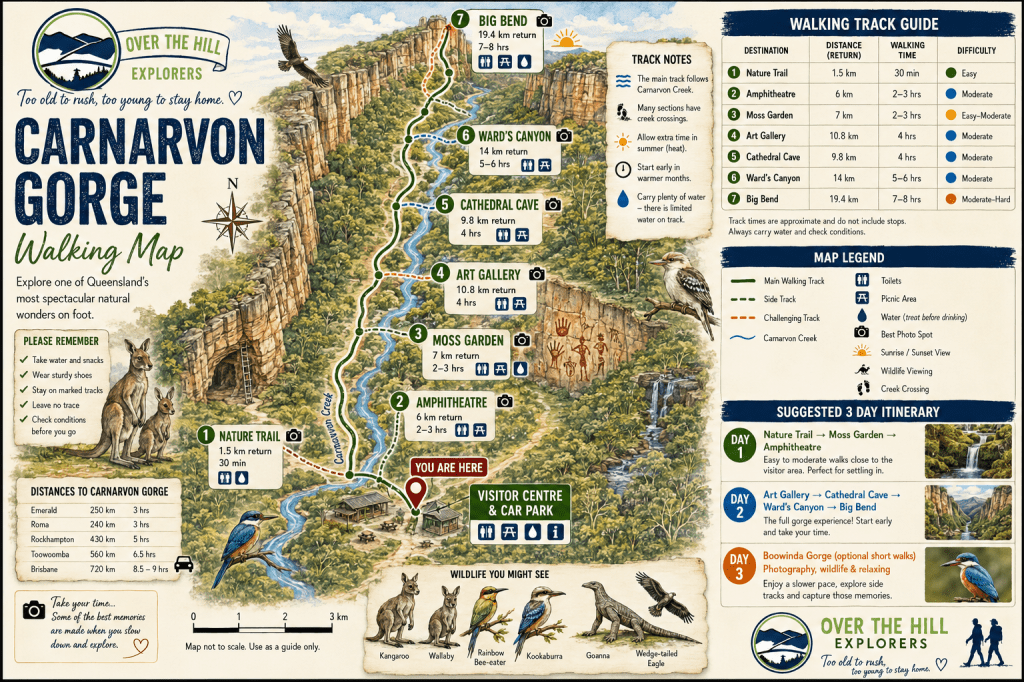
Day One – Settle In and Discover the Lower Gorge
After arriving and checking into your accommodation, take the afternoon to ease into the experience rather than trying to see everything at once.
Begin with the short Nature Trail, a gentle walk that introduces you to the unique plants and wildlife of the gorge. From there, follow the main track to Moss Garden, where a sandstone overhang creates a cool, green sanctuary fed by tiny trickling springs. If time allows, continue on to the Amphitheatre, a spectacular natural chamber reached by climbing a series of ladders through a narrow crack in the rock.
As the afternoon light softens, head back toward camp and keep an eye out for kangaroos and birdlife. Finish the day with a relaxed dinner and enjoy the quiet of the bush.
Day Two – The Heart of the Gorge
Start early to make the most of the cooler morning temperatures.
Today’s walk takes in some of Carnarvon Gorge’s most iconic sites:
- The Ancient Art Gallery, where remarkable Aboriginal rock art tells stories that span thousands of years.
- Cathedral Cave, a vast sandstone overhang known for its acoustics and striking formations.
- Ward’s Canyon, home to ancient cycads and a cool, sheltered environment unlike anywhere else in the gorge.
- Continue to Big Bend, where towering cliffs close in around the creek and reward your effort with one of the most impressive views in the park.
Allow plenty of time to stop for photos, enjoy a picnic lunch, and simply take in the atmosphere.
Day Three – Boowinda Gorge and a Relaxed Farewell
For your final day, explore Boowinda Gorge, a quieter section of the park where lush vegetation, creek crossings, and peaceful scenery encourage a slower pace.
Take your time. Pause often. Listen to the birds and enjoy the feeling of having nowhere else to be.
Before leaving, stop back at the Visitor Information Centre to pick up a souvenir or chat with the rangers about your favourite parts of the trip. As you drive away, you’ll probably find yourself already thinking about a return visit.
Photography Tips
Carnarvon Gorge is a dream destination for photographers.
- Visit Moss Garden early for soft, even light.
- Use a tripod in shaded areas to capture the texture of moss and flowing water.
- Photograph the sandstone cliffs in the late afternoon when warm light brings out the rich colours.
- Carry a wide-angle lens for the larger landscapes and a telephoto lens for birds and wildlife.
- Keep a polarising filter handy to reduce reflections on the creek and deepen the blue of the sky.
Wildlife to Look For
One of the joys of walking the gorge is never knowing what you’ll see around the next bend.
Keep an eye out for:
- Eastern Grey Kangaroos
- Agile Wallabies
- Lace Monitors (Goannas)
- Rainbow Bee-eaters
- Kingfishers
- Kookaburras
- Crimson Rosellas
- Butterflies
- Native orchids and wildflowers (seasonal)
Remember to observe wildlife from a respectful distance and never feed the animals.
Packing Checklist
Before you leave, make sure you have:
- Comfortable walking shoes or hiking boots
- Refillable water bottles (carry plenty of water)
- Broad-brim hat and sunscreen
- Lightweight rain jacket
- Insect repellent
- Snacks and picnic lunch
- Camera and spare batteries
- Wide-angle and telephoto lenses
- Tripod (optional but recommended)
- Small first aid kit
- Offline maps downloaded to your phone
Frequently Asked Questions
How difficult are the walks?
Most of the main track is graded as moderate, with some side trips involving stairs, ladders, or uneven surfaces. A reasonable level of fitness is recommended.
Are there toilets in the gorge?
Toilets are available at the Visitor Area and at a few key points along the main walking track, but not at every attraction. Check current facilities before you set out.
Can I swim?
Swimming opportunities can vary depending on water levels and park conditions. Follow park signage and ranger advice.
How many days should I spend?
While you can see some highlights in a single day, three days allows you to explore at a relaxed pace, enjoy the scenery, and avoid feeling rushed.
 Over the Hill Explorers
Leave a comment